In today’s competitive SEO landscape, simply optimizing content around individual keywords isn’t enough to drive substantial organic traffic. As search engines grow smarter, understanding not just the content but how ideas interconnect, a more structured content strategy is required to build authority and boost rankings. This is where topic clusters and pillar pages come into play. By implementing this advanced strategy, businesses can achieve higher rankings, improve user experience, and establish topical authority.
What Are Topic Clusters?
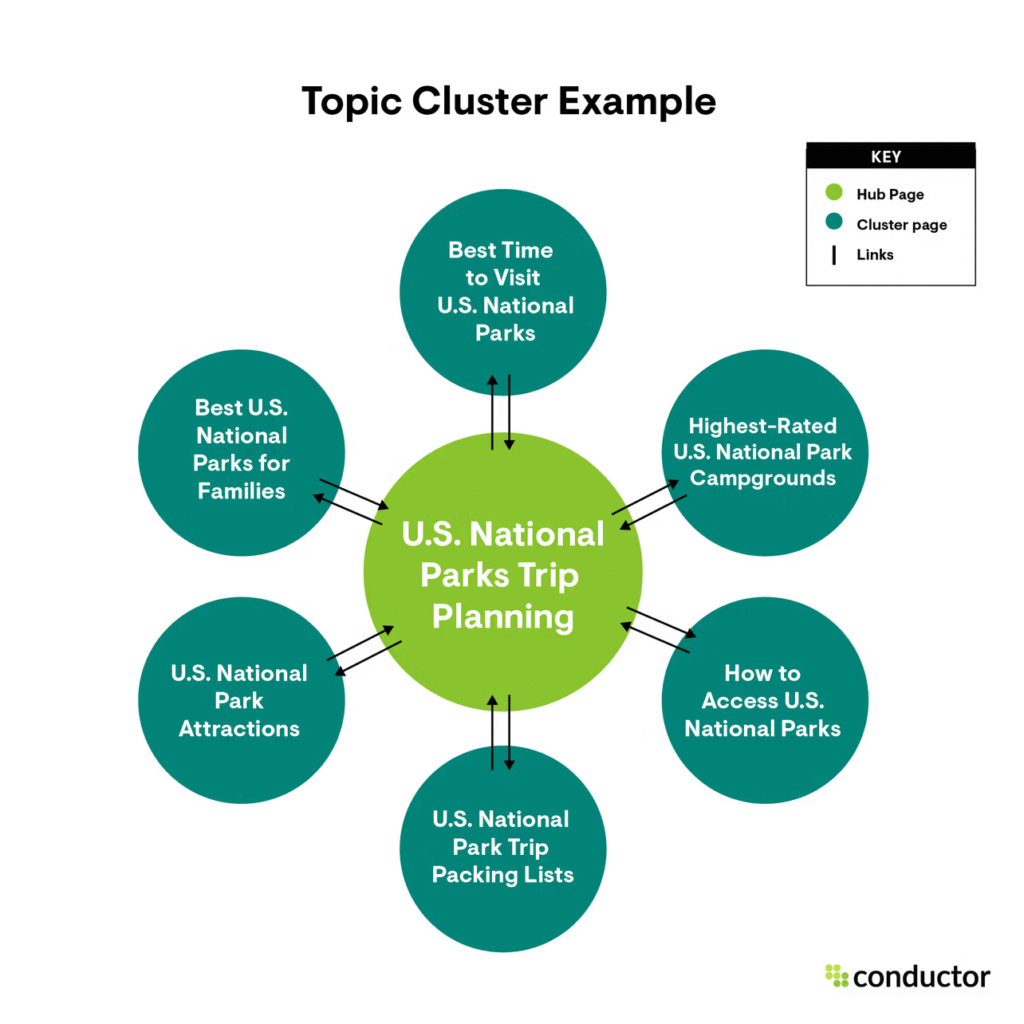
A topic cluster is a group of interlinked pages that revolve around a central theme. At the core of this structure is the pillar page, a comprehensive resource that broadly covers the main topic. Surrounding it are cluster pages, which delve deeper into subtopics related to the pillar page. Each of these subtopics is explored in detail and linked back to the pillar page, creating a web of interconnected content that search engines can easily understand.
This model contrasts with traditional keyword-centric strategies, where individual posts focus on specific keywords without considering their relationship with broader topics. By shifting to a topic cluster model, you can create a robust content framework that aligns with user intent and improves SEO rankings.
Why Topic Clusters Matter for SEO
Search engines like Google have evolved significantly. Algorithms such as Google’s RankBrain and BERT prioritize context and intent over individual keywords. This shift means that creating isolated content for separate keywords can actually dilute your SEO efforts. By grouping related content under a unified topic, topic clusters improve content relevance, make it easier for search engines to understand your site’s structure, and boost authority across a broader range of search queries.
Moreover, Google’s 2022 helpful content update reinforced the need for people-first content. Websites providing comprehensive, in-depth, and useful content are rewarded with higher rankings. Topic clusters align perfectly with this approach, helping businesses create a reservoir of valuable information.
Components of a Topic Cluster Strategy
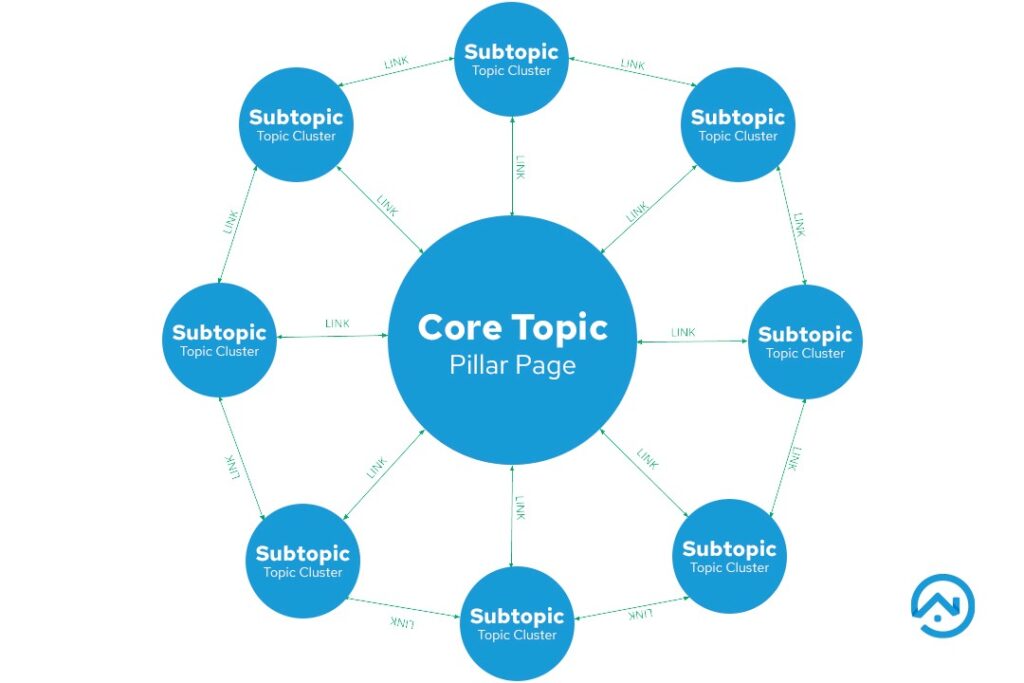
- Pillar Page: This is the central hub that broadly covers the main topic. It offers a comprehensive overview but leaves room for more detailed explanations in the cluster pages. A well-constructed pillar page is typically longer and covers multiple aspects of a topic, providing links to cluster pages for more detailed content.
- Cluster Pages: These are in-depth pages focused on specific subtopics. For instance, if the pillar page is about “SEO,” a cluster page could focus on “Keyword Research Tools” or “Link Building Strategies.” Each cluster page links back to the pillar page, reinforcing the central theme.
- Internal Linking: The structure relies on a strategic linking pattern, where each cluster page links back to the pillar page, and the pillar page links to all the relevant cluster pages. This reinforces the hierarchy, making it clear to search engines that the pillar page is the authoritative source on the subject.
How Topic Clusters Boost Organic Traffic
By organizing content into clusters, you create a more navigable and coherent user experience. Visitors can easily find in-depth content about specific subtopics while remaining connected to the broader theme. This increases dwell time, decreases bounce rates, and encourages users to explore more content on your site—all of which are signals Google considers for ranking pages.
Furthermore, topic clusters help establish topical authority. When a site covers a subject comprehensively, it’s more likely to be seen as an authoritative source. This credibility translates into better rankings not only for your pillar page but also for the associated cluster pages.
For example, implementing a topic cluster strategy for a client’s blog saw their organic traffic increase by 7 to 10 times within a year. By focusing on topics holistically instead of on individual keywords, the client established themselves as a trusted source in their niche.
Steps to Implement a Topic Cluster Strategy
1. Identify Core Topics
The first step is to identify the key topics that are most relevant to your business. These topics should align with your target audience’s search intent and your business goals. For instance, a company specializing in digital marketing might choose “SEO” or “Content Marketing” as a core topic.
2. Research Subtopics
Once you’ve identified your core topics, the next step is to conduct research into potential subtopics. These should be specific aspects of the main topic that your audience is interested in. Tools like Google Keyword Planner, Ahrefs, or Moz can help you find relevant long-tail keywords that will form the basis for your cluster pages.
3. Create a Pillar Page
The pillar page should provide a high-level overview of the main topic. Aim for a comprehensive guide that addresses broad questions while leaving room for deeper exploration through cluster pages. The pillar page should link to each subtopic page to guide users to more detailed content.
4. Develop Cluster Pages
Cluster pages should focus on one specific subtopic and provide in-depth information. Each page should be optimized for a long-tail keyword and include internal links pointing back to the pillar page. This structure creates a logical flow for users and helps search engines better understand the relationship between topics.
5. Implement Internal Linking
Once the content is created, the next step is to link all the cluster pages to the pillar page. Ensure that the pillar page links back to each relevant cluster page, creating a clear, interconnected web of content. This internal linking strategy is key to boosting the authority of the pillar page.
6. Monitor and Adjust
SEO is an ongoing process. Regularly monitor the performance of your pillar and cluster pages using tools like Google Analytics and Ahrefs. Adjust content, update internal links, and continuously improve the user experience to ensure your pages maintain high relevance and authority.
Conclusion
Advanced topic clusters and pillar pages are more than just an SEO trend—they are a long-term strategy for maximizing organic traffic and establishing topical authority. By organizing content around core themes and linking related subtopics, businesses can build a robust content architecture that meets user intent, boosts engagement, and improves search engine rankings. Whether you’re looking to grow your traffic, increase conversions, or simply offer a better user experience, implementing a topic cluster strategy will position you ahead of the competition in the ever-evolving SEO landscape.